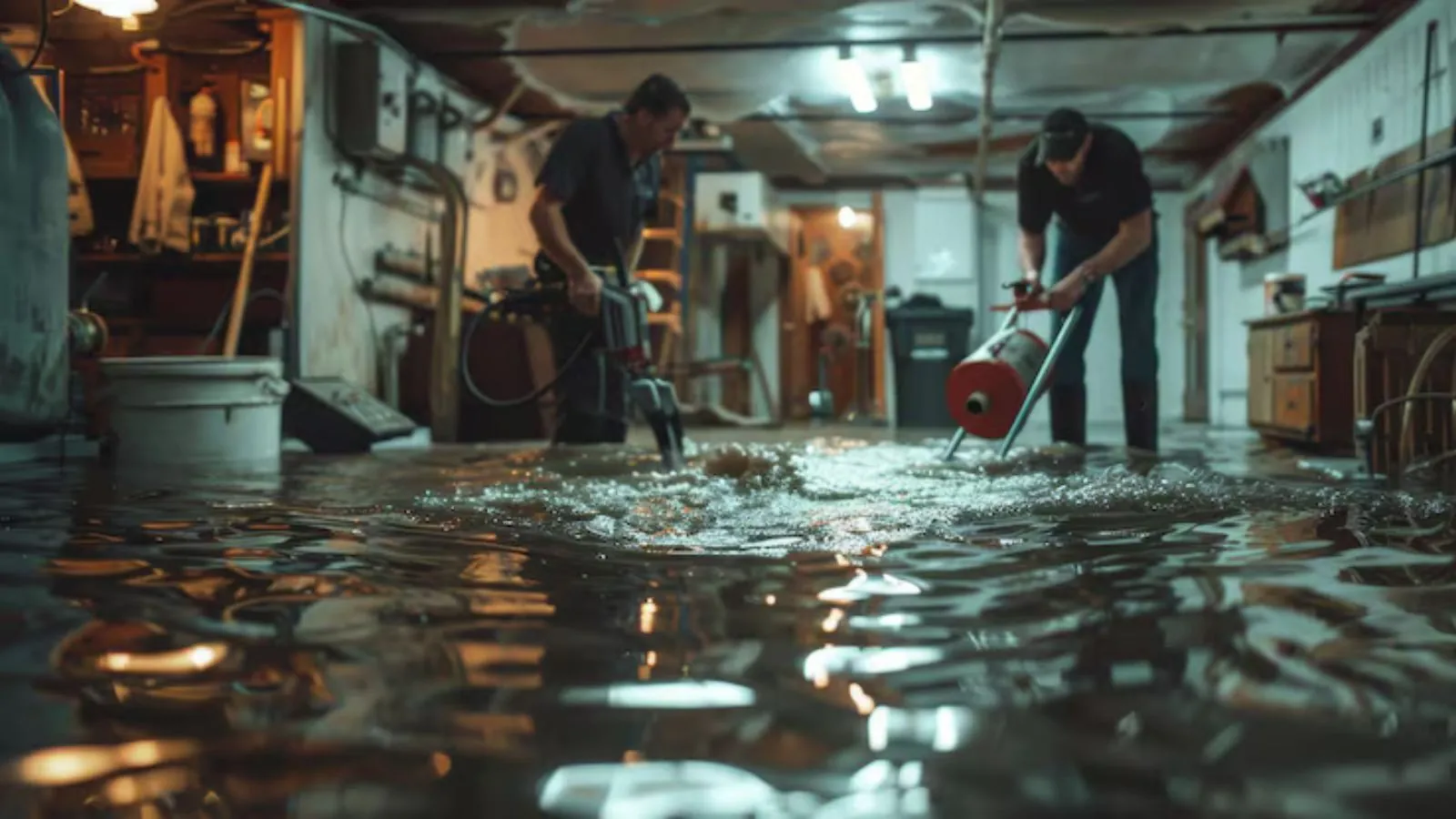
Water extraction is the removal of standing water from floors and low spaces with submersible pumps and powered extraction units, done before any drying equipment is set. In Derby, KS, it is the first job on most emergency calls, because every hour of standing water spreads moisture into drywall, baseboards and flooring. Our 24/7 line dispatches crews to pull the water out and measure what is still wet.
Neighborhood guides are available for Duck Creek and the other Derby areas on the service area page.
While you wait for the crew, stop the source if you can. Turn off the main water valve for a supply line failure, keep everyone out of the water, and lift small valuables off the floor. If the water is touching outlets, appliances or a panel, stay out and call the utility or 911 before you call us.
When standing water is an emergency
Water that is moving, rising or coming from a pipe is an emergency at any hour. Water that has been sitting for a day is just as urgent in a different way, because wet padding and the bottom of the wall begin absorbing it right away. Same-day response is available when crews can reach you, and after-hours calls are answered by the same dispatch line.
Stop the source
Close the main water valve or the fixture shutoff. If you cannot find it, the City of Derby main line at 316-788-1519 can point you to the right department.
Make the area safe
Leave the panel alone if it is wet. Unplug nothing that stands in water, and keep children and pets out of the room.
Lift and document
Raise valuables onto dry surfaces, then take photos and short videos of the water level before anything is moved.
Where Derby water usually comes from
Derby buys its water wholesale from the City of Wichita, so pressure problems and main breaks on the supply side tie back to that system. Inside the home, the common sources are a failed supply line, a water heater tank, a washing machine hose or a backed up drain.
Whatever the age of the home, plumbing is worth checking after any extraction job.
If the water came from outside, such as rain running toward a foundation, the fix is different from a pipe failure and the drying plan changes with it. Dispatch will ask where the water started because that decides how the crew approaches the room.
How extraction is done
A crew starts by finding the depth and the path the water traveled. Submersible pumps move deep water, and wheeled extraction units pull the remaining film from carpet, tile and hard floors. On carpeted rooms, a weighted wand squeezes water out of the pad without lifting every inch of the room.
Moisture meters and a thermal imaging camera then show wet spots the eye misses, such as a soaked wall base behind clean paint. That map decides where air movers and LGR dehumidifiers go next, which is the drying phase covered on the structural drying and dehumidification page.
Extraction by situation
| Situation | What the crew does | Typical next step |
|---|---|---|
| Pipe or fixture failure | Pumps standing water and checks the walls beside it | Wall and cabinet moisture check, see burst pipe cleanup |
| Rain or groundwater entry | Extracts and checks the lowest rooms | Basement drying plan, see basement water damage |
| Backed up drain | Treats the water as contaminated before extraction | Sanitizing and removal, see sewage backup cleanup |
| Slow soak from a small leak | Light extraction with moisture mapping | Targeted drying of the affected area |
What affects the price
Scope and price are explained before work starts. These are the factors that move the number:
- Water category, because clean supply water and contaminated water need different handling.
- Depth and the square footage that got wet, including rooms the water reached through a doorway.
- Materials involved, such as carpet and pad, laminate or tile over a wood subfloor.
- Equipment needed and how many days the drying phase runs.
- Whether repair or rebuild work follows the water removal.
Insurance coverage depends on your policy and on how the water got there. Sudden and accidental water damage is often covered, while gradual leaks and neglect often are not, so check your policy or ask your insurer. Want your real number? Call dispatch and describe the room.
Standing water in the house right now? Dispatch is open 24/7 and can send a crew when one is available.
☎ Call (316) 535-3098Related water removal pages
Extraction often leads straight into drying, so crews usually move on to structural drying once the standing water is gone. If your floor was hardwood, the hardwood floor page explains why timing matters. Neighbors in Mulvane call the same line.
What the standard says about standing water
ANSI/IICRC S500 is the published industry standard for professional water damage work. For standing water it means identifying the water category before pumping starts, so the crew knows whether protective gear and disposal rules apply. Do not enter water that touches outlets, and do not use a household vacuum on standing water.
Common questions
Do you handle water extraction emergencies at night or on weekends in Derby?
Yes. The dispatch line is open 24/7, including nights, weekends and holidays. Same-day response is available when crews can reach you, and the call taker will ask about the water source so the crew arrives prepared.
How fast does the water need to come out?
As soon as it safely can. Carpet padding, drywall bottoms and subfloors begin absorbing within hours, and every extra day adds drying time and repair scope.
Can I rent air movers and dehumidifiers and do it myself?
Equipment rental is not something this page offers. A rental fan can move air, but without moisture readings it is easy to stop drying while a wall or subfloor is still wet.
Will the crew work to an industry standard?
The published standard for water damage restoration is ANSI/IICRC S500. You can ask any company whether its crews work to it and how they document moisture readings.
Standing water in a Derby home or shop? Call now and dispatch will walk you through the first safe steps.
☎ Call (316) 535-3098