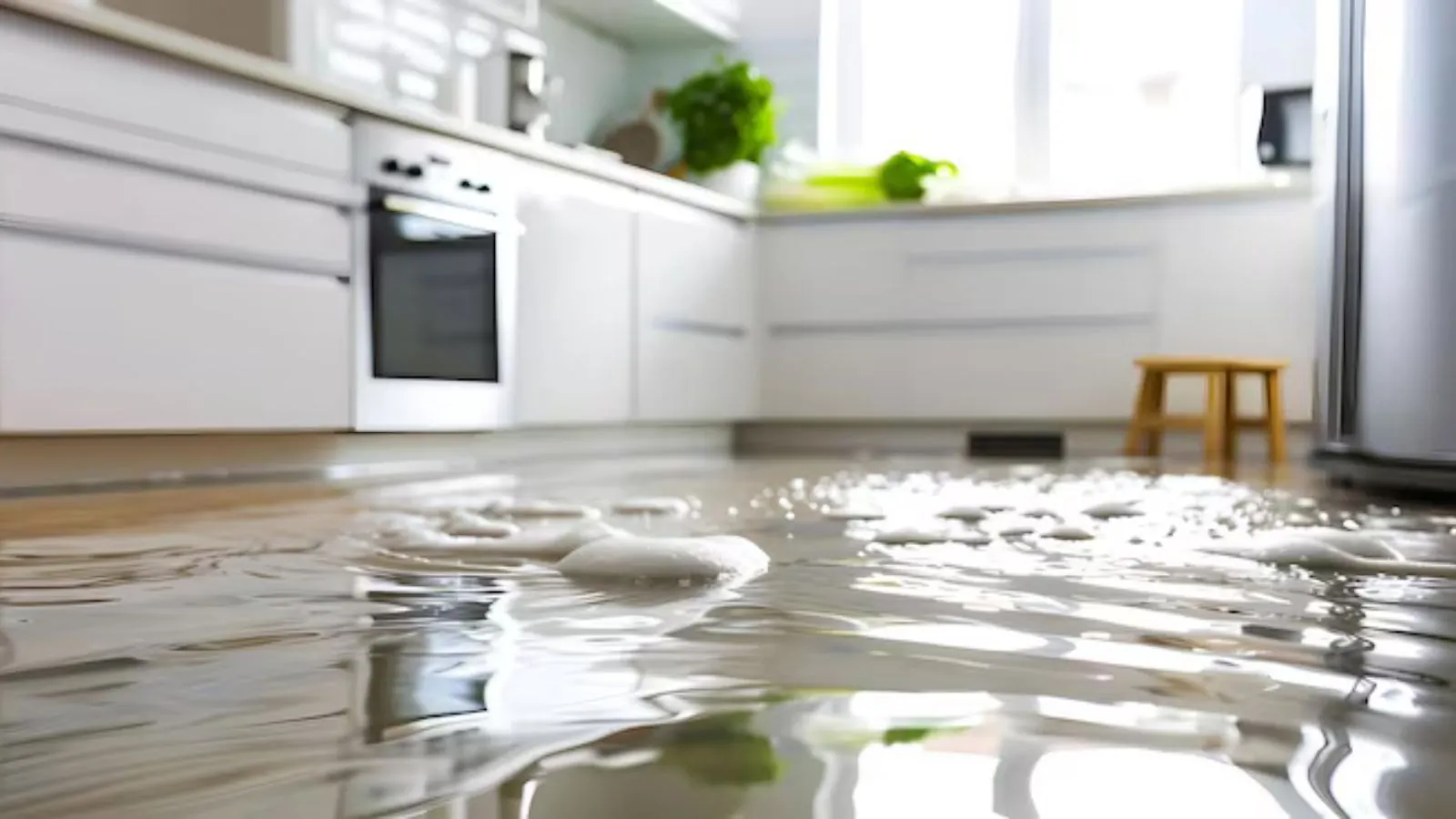
Flood damage cleanup removes surface or groundwater that has entered a structure, along with the silt and contamination it carries. In Derby, KS, that can mean rain running toward a foundation, water pushing up through a floor drain or river water in a low area. This water is treated as contaminated, so extraction, removal of porous materials and sanitizing are part of the job.
If water is in the house, stay out of rooms with outlets or appliances in the water and keep children and pets away. Call the utility or 911 for any electrical or gas risk before you call us. Leave the panel alone unless you can reach it dry and know how to cut power safely.
When flood water is an emergency
Flood water is an emergency from the first minute. The line is open 24/7, and same-day response is available when crews can reach you, though high water or road closures can affect access. Crews will tell you what they can and cannot start before the water recedes.
Stay out of electrical risk
Do not wade through water near outlets, panels or plugged in appliances. Call the utility or 911 first.
Protect people
Keep children and pets out of the water. Wash any skin contact with soap and clean water.
Document it
Photograph the water line on walls and furniture before cleanup begins.
Derby flood facts that are on record
The City of Haysville's flood page names the Arkansas River gauge at East 83rd Street South in Derby as the closest monitoring point for the area. It lists the 1998 Halloween Flood as the highest recorded at that gauge, 16.6 feet, and notes the river reached 15.53 feet in 2019. Those are river readings, not a promise about your street.
To learn your own exposure, check the FEMA flood map for your address and ask the City of Derby about floodplain rules, since the city lists a floodplain permit among its permit types. Flash flooding and drainage ponds can also affect streets that are not mapped as high risk.
What happens during cleanup
Crews pump out deep water and extract the rest, then remove materials that cannot be cleaned, such as soaked padding and wet insulation. Hard surfaces are cleaned and treated with an antimicrobial. Moisture meters and thermal imaging then guide air movers and dehumidifiers, which is covered on the structural drying page.
Wet drywall in a flood is often cut out above the visible waterline because wicking carries moisture upward. Your crew will explain what is coming out and why before work begins.
Flood, storm and sewer: which page fits
| Water source | What it is | Page |
|---|---|---|
| Rising or surface water | Groundwater, drainage or river water entering the home | This page |
| Rain and wind through the roof or siding | Storm damage through the building envelope | Storm water damage |
| Backed up drain or sewer line | Contaminated water from inside the plumbing | Sewage backup cleanup |
| Water in a below-grade room | Seepage or sump failure | Basement water damage |
What affects the price
Scope and price are explained before work starts. These factors move the number:
- Water category, since flood water is handled as contaminated.
- Depth, duration and square footage reached.
- Materials that must be removed rather than dried.
- Drying days and equipment.
- Rebuild work after drying is confirmed.
Flood damage is usually excluded from standard homeowners policies. The Kansas Insurance Department says homeowners, renters and similar policies do not cover damage caused by rising water, and flood insurance is a separate policy with a 30 day waiting period. Check your policy and ask your insurer. Want your real number? Call dispatch.
Flood water inside the house? Call the 24/7 line before you start moving things.
☎ Call (316) 535-3098Documenting a flood loss
Flood losses involve more paperwork than most. Photograph the high water line on walls, take wide shots of each room and record the date and time the water arrived and receded. Keep receipts for hotel stays, cleaning supplies and equipment rental.
If you have a flood policy, call the carrier quickly, because claims often need prompt notice. A standard homeowners policy generally excludes rising water, so do not assume coverage. Ask the carrier what it needs from you and when.
Contaminated water and the S500 categories
Floodwater from outside is treated as Category 3 under ANSI/IICRC S500, which means grossly contaminated. Do not wade through it, do not eat or drink anything it touched, and wash with soap and clean water after contact. Porous materials such as padding and insulation are usually removed.
Common questions
Do you handle flood emergencies at night or on weekends in Derby?
Yes. The line is open 24/7. Same-day response is available when crews can reach you, though high water or road closures can affect arrival, and the call taker will tell you what to expect.
Is flood water treated differently from a pipe leak?
Yes. Surface and groundwater are handled as contaminated, so porous materials are removed and surfaces are sanitized instead of simply dried.
Does homeowners insurance cover flood damage?
The Kansas Insurance Department says standard homeowners policies do not cover damage caused by rising water. Ask your insurer about a separate flood policy and what your current one covers.
Can I check my flood risk before a flood happens?
Yes. Use the FEMA Map Service Center for your address and ask the City of Derby about floodplain rules before you build or renovate.
Flood water inside the house? Call the 24/7 line and keep clear of outlets and the panel.
☎ Call (316) 535-3098