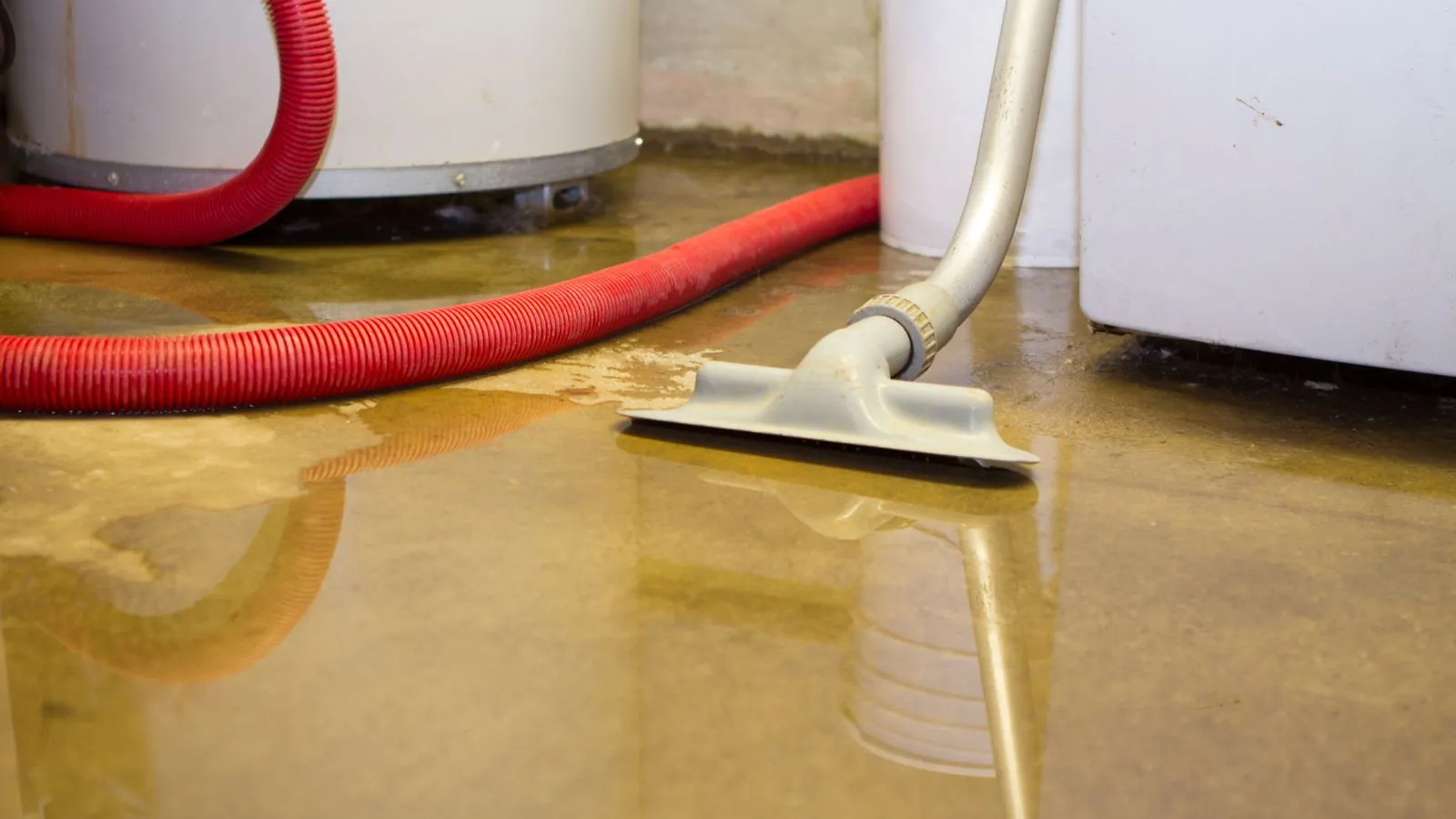
A slab leak is a leak in a water line that runs beneath or within a concrete slab foundation. Slab leak water damage in Derby, KS comes from the leak itself and from the water that pushes up through flooring, cracks or expansion joints. Because the pipe is buried, the damage is often found late, in a floor that feels damp or a meter that keeps spinning.
Check your water meter with every fixture off. If it keeps moving, close the main valve and call. Whether homes in Derby sit on slabs, basements or crawl spaces varies by neighborhood and age, so a slab leak is the right page only if your home has a slab foundation. Otherwise see crawl space water damage or basement water damage.
Slab leak emergencies
When the main is off and the meter stops, the leak is upstream of your fixtures and likely below the floor. The line is open 24/7, and a same-day visit is possible when a crew is free. Dispatch will ask whether you hear running water or feel a warm patch.
Confirm with the meter
With all fixtures off, check whether the meter dial still moves. Movement means a leak.
Shut the main
Close the main valve and note whether the sound stops.
Protect the floor
Lift rugs, move furniture off the damp area and photograph it for your records.
What a slab leak looks like
A slab leak does not look like a burst pipe. It tends to appear in small ways.
- A warm spot on a floor, often over a hot water line.
- Damp carpet, buckled laminate or lifted tile with no visible source.
- The sound of running water when everything is off.
- Baseboards that swell from the bottom.
- A water bill that jumps month over month.
Slab leak versus other leaks
Because this problem is hidden, a plumber with leak detection equipment usually locates it. The restoration job starts with moisture readings across the flooring, and the plumber chooses between repairing the line under the slab and rerouting it overhead through the walls.
If the same symptoms show up in a home without a slab, the cause is usually a supply line in a wall or ceiling. The burst pipe water damage page covers pressurized lines in walls.
How the water damage is handled
The crew extracts surface water, lifts the flooring that is wet and checks the concrete and the subfloor edges with a moisture meter. Concrete holds water for a long time, so drying uses a dehumidifier and air movers for days, not hours. Baseboards and the lower drywall are removed and dried as needed.
Flooring that cannot be dried in place, such as glued down wood or pad backed carpet, is removed. The process mirrors the one on the structural drying and dehumidification page.
Where slab water shows up
| Flooring | What the water does | Likely outcome |
|---|---|---|
| Carpet and pad | Wicks upward from below | Pad replaced, carpet dried or replaced |
| Glued wood or laminate | Swells and lifts at seams | Often removed and replaced |
| Tile | Water finds grout lines and cracks | Dried and checked for lifted tiles |
| Concrete under any floor | Holds moisture for days | Dehumidified until readings fall |
What affects the cost
Dispatch explains the scope and price before work begins. The drivers are:
- How long the line leaked before it was found.
- Size of the floor area that is wet and the flooring type.
- Whether baseboards and lower walls must be removed.
- Days of concrete drying and equipment count.
- Plumbing repair or rerouting, which is billed by the plumber.
Insurance wording varies a great deal. Some policies cover water damage from a sudden slab leak while excluding the cost of reaching the pipe, and many exclude slow, repeated leaking. Ask your insurer exactly what your policy says. For your own estimate, describe the floor to dispatch.
Warm floor or meter moving with everything off? Call the 24/7 line.
☎ Call (316) 535-3098Safety and the standard for slab leaks
If water is rising through the floor, close the main valve and stay off any area where the floor feels warm or soft. Do not touch wet outlets. ANSI/IICRC S500 guides drying of flooring, walls and the slab itself, which dries slowly and needs long monitoring.
Common questions
Do you handle slab leak emergencies at night or on weekends in Derby?
Yes. A leak under the slab can keep running at any hour, so the line is open 24/7, and a same-day visit is possible when a crew is free.
How do I know I have a slab leak and not a surface leak?
A moving water meter with all fixtures off, a warm floor spot or the sound of running water point toward the line under the floor. A plumber confirms it with detection equipment.
Do you repair the pipe under the slab?
A plumber does. The restoration crew handles drying, removal of wet flooring and documentation of the moisture.
Why does concrete take so long to dry?
Concrete is dense and absorbs water, so it releases moisture slowly. Dehumidifiers pull it out over days and readings confirm when it is done.
Warm floor, damp spot or running water sound? Shut the main and call the 24/7 line.
☎ Call (316) 535-3098