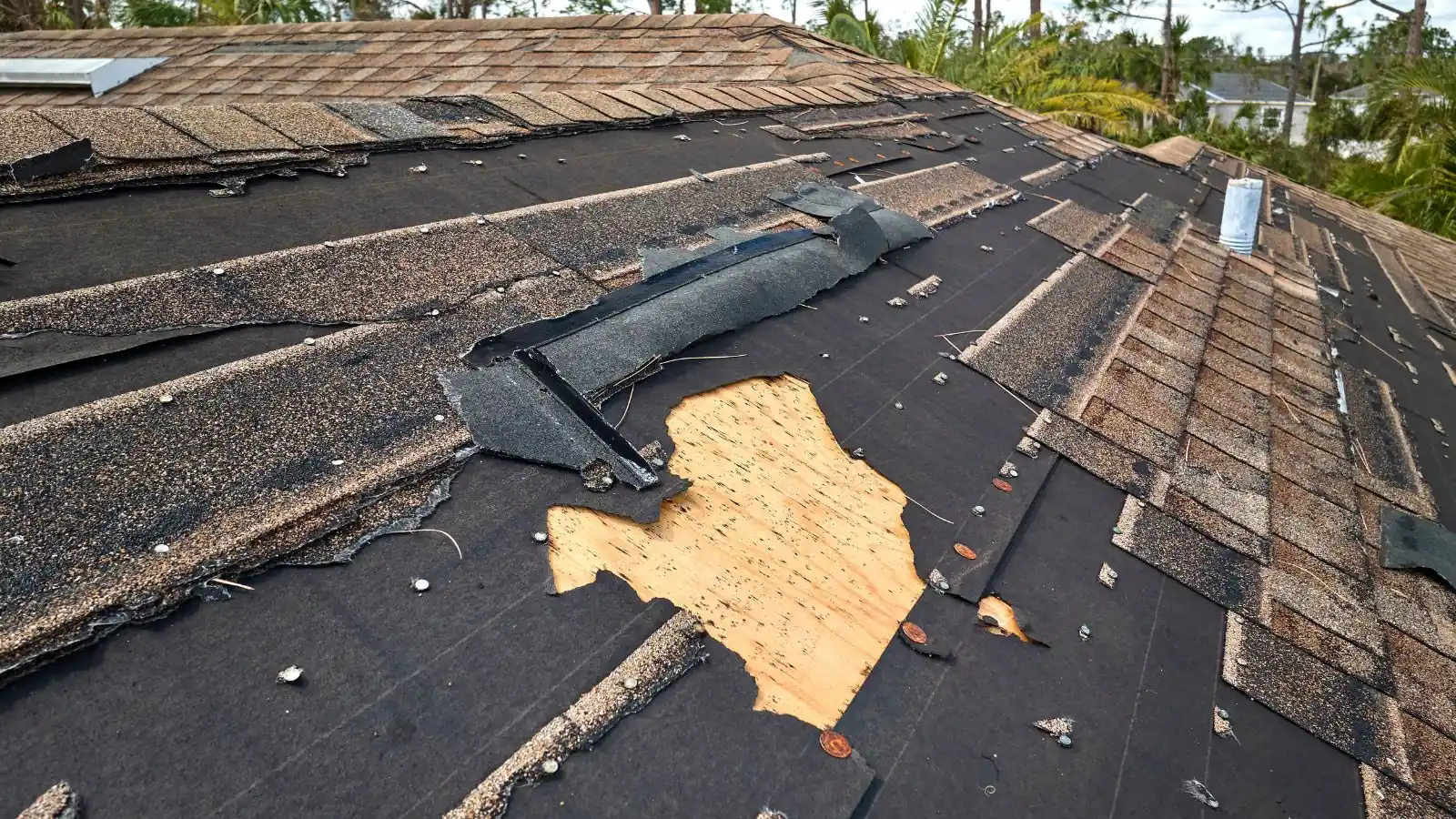
Storm water damage cleanup removes and dries the water that wind and rain push through a roof, siding, windows or doors, and the wet insulation and drywall behind them. In Derby, KS, a storm can strip shingles, lift flashing or crack a window, and the water follows the path of least resistance into the ceiling or wall.
Heavy rain is also why the High Park and Madison Avenue guide exists, since the City of Derby names that area for high water crossings.
It differs from rising flood water, which is covered on the flood damage cleanup page.
Be safe first. Stay inside during active weather, keep away from downed lines and wait until it is clear to check the roof. Cover the opening with a tarp only if you can do it without climbing in wind or rain, and call dispatch.
After the storm: first steps
The line is open 24/7, so a storm that hits at 2 a.m. still reaches dispatch. A same-day visit is possible when a crew is free, though widespread storms can mean long queues and delayed arrival, and the call taker will tell you honestly.
Stay clear of hazards
Keep away from downed lines and anything that is sagging overhead, and call 911 for any emergency.
Limit more water
Move belongings, place buckets and, if safe, cover openings with plastic sheeting.
Take photos
Photograph the roof, siding and wet rooms from the ground and inside before cleanup begins.
What storm damage looks like inside
Rain that enters through a roof soaks the attic insulation and then the ceiling below, which is why the stain often appears far from the opening. Water that comes through siding or a window collects in the wall cavity and swells baseboards. Because wind blows rain sideways, the wet area can be larger than the visible hole.
Storm damage gets its own page because the insurance and repair path differs from a pipe leak. The ceiling page explains how a stain forms and how a ceiling is dried.
Local weather facts
This page does not state a storm date, rainfall figure or hail size for Derby, because those have not been checked against National Weather Service records. For a past event, the National Weather Service Wichita office and the National Centers for Environmental Information keep official records.
What does apply is basic: a roof that has been hit by a storm should be inspected by a roofer, since hidden damage can leak weeks later.
How the cleanup works
The crew extracts water, removes wet insulation and drywall that cannot be saved and uses moisture meters and thermal imaging to find the wet zone. Air movers and dehumidifiers dry the area, and moisture readings are logged for the claim. The roofer repairs the opening, and the restoration crew dries behind it.
If the storm also brought rising water, the basement water damage page covers below-grade rooms.
Storm entry points and results
| Entry point | Typical damage | What the crew does |
|---|---|---|
| Roof shingles or flashing | Attic insulation, ceiling | Dry the cavity, remove wet insulation |
| Siding or window seam | Wall cavity, baseboard | Open the wall, dry the framing |
| Chimney or vent flashing | Ceiling near the penetration | Moisture map, dry, repair |
| Garage door or door threshold | Floor edge, drywall base | Extract, dry the base of the wall |
What affects the cost
You will get scope and price explained before work starts. Cost drivers include:
- How many openings and rooms the storm affected.
- Amount of wet insulation and drywall to remove.
- Drying days and equipment.
- Tarping or board-up needed to stop more water.
- Repairs and paint afterward.
Wind and hail damage are usually part of a standard homeowners policy, though some policies have separate deductibles for them. Rising water is a different matter and is generally excluded. Read your policy and ask your insurer. For a number that fits your home, describe the damage to dispatch.
Storm water inside? Call the 24/7 line and tell dispatch where it came in.
☎ Call (316) 535-3098After the storm passes
When the wind and rain stop, walk the house with a flashlight. Look at ceilings, window frames, the attic hatch and the garage. Place buckets under active drips, and put a tarp over a damaged roof if you can do so safely from the ground. Do not climb onto a wet roof.
Photograph everything before you move it, and note the time of the storm. Local weather reports for the date can support a claim. A roofer handles the opening in the roof, and the restoration crew handles the water inside.
Storm safety and what the standard covers
Stay away from downed lines, avoid standing water near outlets and do not climb on a wet roof. ANSI/IICRC S500 guides the drying of rooms after a storm leak, including how readings are used to decide whether insulation and drywall can stay.
Common questions
Do you handle storm water emergencies at night or on weekends in Derby?
Yes. The line is open 24/7. After a widespread storm, crews may be stretched thin, and dispatch will give you an honest idea of timing.
Do you repair the roof?
A roofer repairs the roof. The restoration crew dries the structure and documents the damage.
Is storm water different from flood water?
Yes. Rain entering through the roof or siding is treated differently from rising surface water, which is generally contaminated and excluded from standard homeowners policies.
Should I wait for the insurance adjuster before drying?
Take photos, make temporary protection and call your insurer, but do not let damaged areas sit wet. Ask your insurer what it expects.
Storm water inside the house? Call the 24/7 line and tell dispatch where it came in.
☎ Call (316) 535-3098