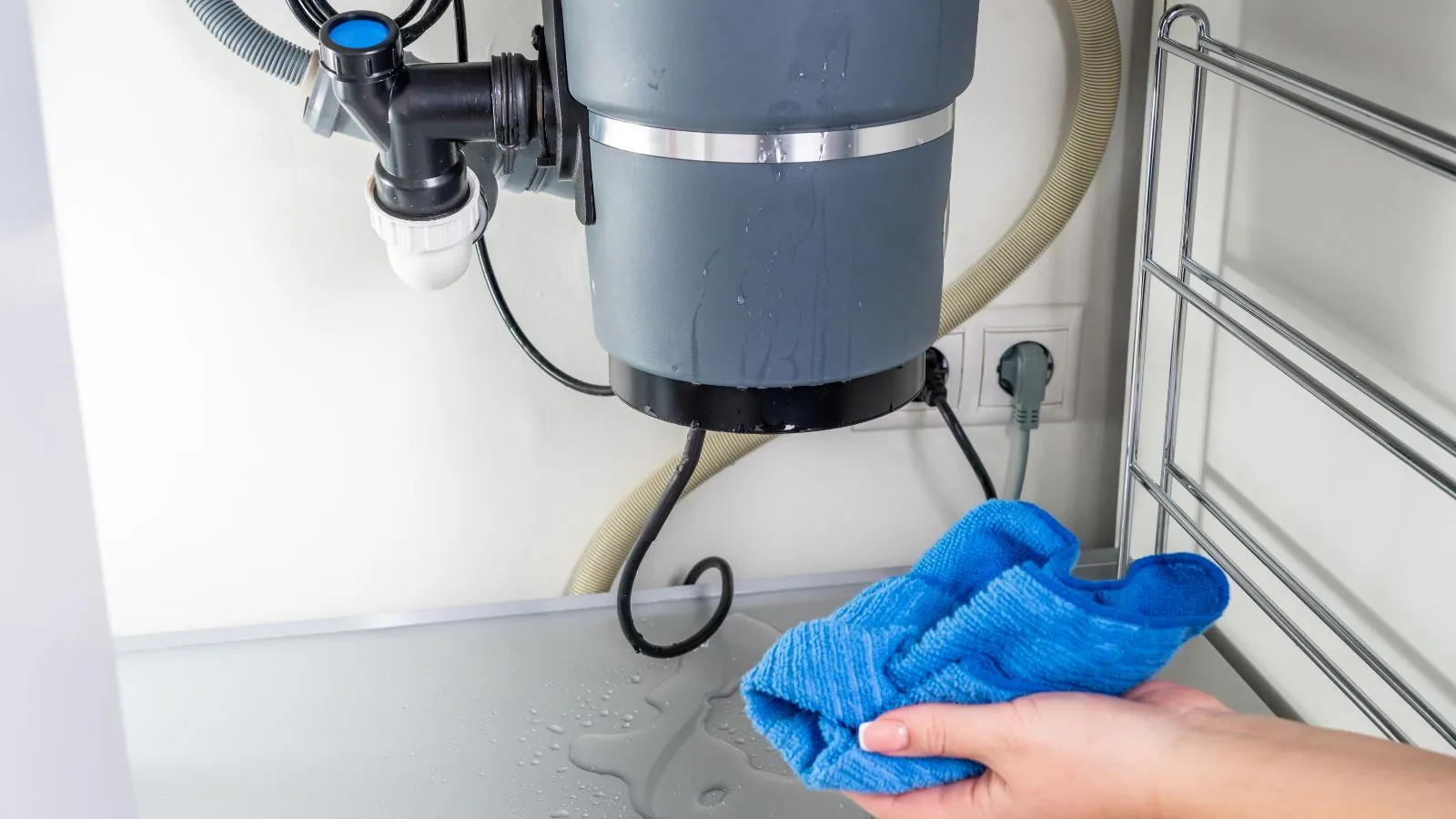
An appliance leak is water released by a washing machine, dishwasher, refrigerator ice maker, disposal or similar fixture, through a supply hose, drain line or internal part. Appliance leak water damage in Derby, KS often starts quietly behind or under the machine, which means the floor and the cabinet base can be wet before you see a puddle.
Homeowners in communities such as Amber Ridge often start with exactly this kind of leak.
The water is usually clean at first, though a drain line leak adds soap and food residue.
Close the shutoff valve at the wall behind the appliance, then unplug it only if the cord and outlet are dry. If water is touching the outlet, leave it alone and cut power at the breaker if you can reach the panel dry. Call dispatch after the water is stopped.
Appliance emergencies
Burst washer hoses and stuck dishwasher valves run at full household pressure, so the volume can be large. The line is open 24/7. Crews can often respond the same day, depending on availability, and the call taker will ask which appliance failed and which floor it sits on.
Close the valve
Turn off the appliance supply valve, usually behind or beside the machine, or the main if you cannot reach it.
Check the outlet
Do not touch a cord sitting in water. Cut the breaker only if the panel is dry and reachable.
Photograph the machine
Record the make, the hose or fitting, and the wet floor for your records.
Why appliances leak
Rubber washer hoses crack at the connectors with age. Dishwasher inlet valves stick open, ice maker lines pull loose from the back of a refrigerator, and drain hoses clog and back water into a pan. Many of these parts have a short life, and replacement after a few years is cheaper than a flooded laundry room.
A leak that began behind a wall box can travel into the floor below, which is why upstairs washers sometimes show up as a stain on a ceiling. See the ceiling water damage repair page when that happens.
Signs of a slow appliance leak
- A dark, soft or cupped patch of floor in front of a dishwasher.
- Baseboards that swell next to a laundry area.
- Water sound after the machine is off.
- A rising water bill with no new habit to explain it.
- Cabinet bases that feel soft under a sink or fridge.
How cleanup is handled
The crew extracts surface water and checks the floor and wall base with a moisture meter. Under a dishwasher, moisture can sit beneath the cabinet toe kick and under the flooring, so removal of the kick board and a bit of subfloor is common. Air movers and dehumidifiers dry the area, and readings are logged until the materials match your dry reference.
If wood flooring buckled, the hardwood floor page covers the options. The cabinet side of a kitchen leak is explained on the kitchen water damage page.
Appliance, water type and next step
| Appliance | Water type | Common damage |
|---|---|---|
| Washing machine | Clean supply or gray drain water | Flooring, baseboards, floor below |
| Dishwasher | Clean supply, then drain water | Toe kick, cabinet base, subfloor |
| Refrigerator ice maker | Clean supply | Flooring, slow subfloor soak |
| Disposal or sink drain | Gray water | Cabinet floor, wall base |
What affects the cost
Before any work starts, you get the scope and the price explained. The factors that shape it:
- How long the appliance ran before it was found.
- Flooring type and whether it can be dried in place.
- Whether the leak reached a wall, a cabinet or a room below.
- Number of drying days and equipment.
- Replacement flooring or cabinet work afterward.
Policies often respond to sudden failure of a hose or valve, and often do not respond to a slow drip that went unaddressed. Read your policy and ask your insurer about the wording. For a number that fits your house, describe the damage to dispatch.
Appliance still running or floor already soft? Call the 24/7 line for a crew.
☎ Call (316) 535-3098What to do and not to do around a leaking appliance
Unplug the appliance only if the outlet and floor are dry, and close its supply valve. Do not tilt or drag a heavy appliance through water. ANSI/IICRC S500 sets out how a leak is categorized, which decides how cabinets and flooring are handled.
Common questions
Do you handle appliance leak emergencies at night or on weekends in Derby?
Yes. Appliances fail at all hours, so the line is open 24/7. A same-day visit is possible when a crew is free, and the call taker will ask which appliance and which floor.
Will you replace the appliance or the hose?
A plumber or appliance technician fixes the machine and its connections. The restoration crew handles extraction, drying and moisture documentation.
Is the water from a washing machine clean?
Supply water is clean, but a leaking drain hose carries gray water with detergent and lint. Crews note which one it is because it changes how materials are treated.
Should I pull the appliance out myself?
Only if the valve is closed and the floor is not slick or electrified. Moving a heavy machine through water risks injury and a torn hose.
Washer, dishwasher or fridge leaking now? Close its valve and call the 24/7 line.
☎ Call (316) 535-3098