Commercial water damage restoration covers water losses in offices, shops, restaurants, schools, multi-unit buildings and warehouses. In Derby, KS, that means strip centers along corridors such as North Rock Road, medical suites, restaurants and the multi-tenant buildings where one unit's pipe can soak the next. The work is the same extraction and drying as a home, but the scale, the tenants and the downtime change the plan.
If your building is in the older core of town, the Downtown Derby page explains how mixed shops and homes are handled.
Shut the water off at the building main or at the tenant's valve, turn off power to affected circuits only if you can reach the panel dry, and move inventory and records off the floor. Call dispatch from a safe place and tell us whether the building is open to customers.
Commercial emergencies
The line is open 24/7, so a pipe that fails on a Saturday night still reaches a person. Crews can often respond the same day, depending on availability, and the call taker will ask about square footage, the building type and who controls the water shutoff.
Isolate the water
Close the building main or the tenant valve. In a multi-unit building, notify the property manager.
Protect inventory and records
Move stock, files and electronics onto dry surfaces or racks.
Document the loss
Photograph affected spaces, signage and stock before it is moved.
How commercial loss differs from a home loss
Business owners deal with more than wet floors. A restaurant has a health inspection to think about, a retail store has a front door to reopen and a landlord may have to coordinate several tenants. Water in one suite often reaches another through a ceiling or a shared wall, so the first call should include a property manager.
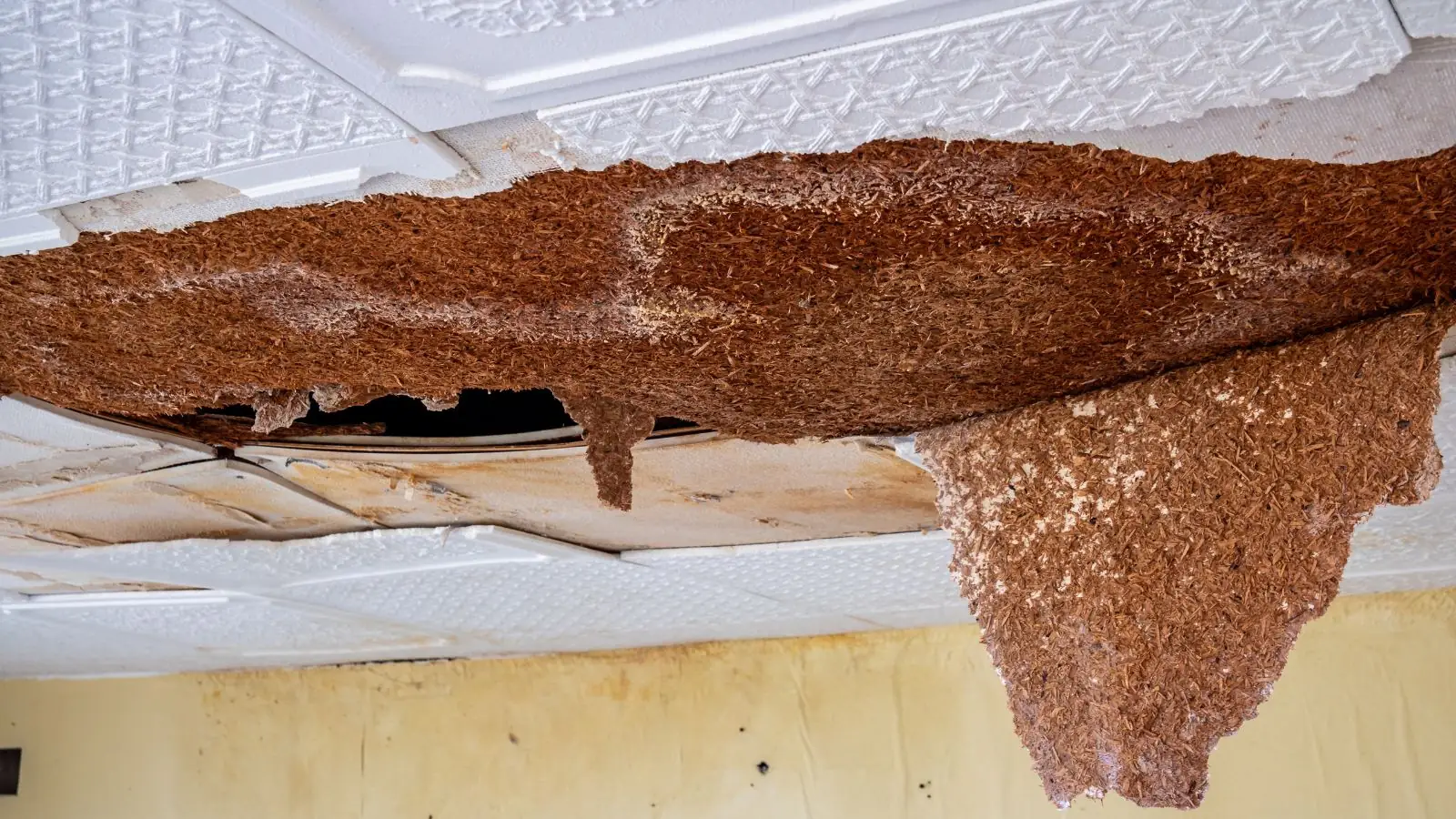
Commercial buildings also mean more materials, such as suspended ceiling tiles, commercial carpet, metal studs and vinyl tile. Some dry in place and some do not, which is why moisture readings on day one matter.
Local businesses and multi-unit buildings
Derby has retail strips, medical offices, and schools and recreation buildings such as the Derby Recreation Center and Rock River Rapids Aquatic Park, which show how large and water heavy a public building can be.
A pool, locker room or mechanical room has its own failure modes, and the repair plan is different from an office. Ask the crew how it will keep an open area separate from the work zone.
How the work proceeds
The crew extracts standing water, sets air movers and dehumidifiers and checks walls, ceilings and floors with moisture meters. Wet ceiling tile and insulation are removed, and the crew documents each room for an insurance conversation. Drying readings are logged until dry, using the same method as the structural drying page.
Where the building is a retail space, crews can often work in phases so part of the space reopens sooner. Ask about phasing before work begins.
Commercial loss and what it means
| Building type | Typical issue | Priority |
|---|---|---|
| Retail or office suite | Supply line, ceiling leak, water heater | Reopen quickly, protect stock |
| Restaurant or food service | Kitchen drain, grease line, sewage | Sanitize, meet inspection needs |
| Multi-unit or apartment | Water in one unit reaching others | Coordinate tenants and manager |
| Warehouse or shop | Roof leak, sprinkler or floor drain | Protect equipment and inventory |
What affects the cost
The crew gives you scope and price before work begins. The cost depends on:
- Square footage and number of tenant spaces involved.
- Water category and building materials.
- Hours of after-hours or phased work.
- Drying days and equipment.
- Rebuild and finish work once dry.
Commercial property policies vary widely on water damage, business interruption and tenant responsibility. Read your policy and talk with your insurer or agent about what applies to your loss. For a number that fits your building, describe it to dispatch. For losses that are mainly storm related, see storm water damage.
Business losing hours to water? Call dispatch and tell us about the space.
☎ Call (316) 535-3098What to do first in a wet commercial building
Keep customers and staff out of wet areas, shut off the water at the building main, and call the utility about electrical risk. ANSI/IICRC S500 applies to commercial work as well, and records matter more because a lease or insurer may require them.
Common questions
Do you handle commercial water emergencies at night or on weekends in Derby?
Yes. The line is open 24/7, and a same-day visit is possible when a crew is free. The call taker will ask about building type, size and who controls the water shutoff.
Can you work while my business stays open?
Often in phases, with equipment set in the wet area and the rest of the space kept open. Ask the crew what is practical for your building.
Do you work with property managers and landlords?
Yes. Water in one unit often reaches another, so the plan usually includes the manager and any affected tenants.
Do you handle restaurants and food service losses?
Water in a kitchen or from a sewer line needs sanitizing. Ask about local inspection requirements with your health authority, since they apply separately.
Water loss at your business? Call now and tell dispatch about the building and the downtime.
☎ Call (316) 535-3098