My walls and floors still feel damp, what now?
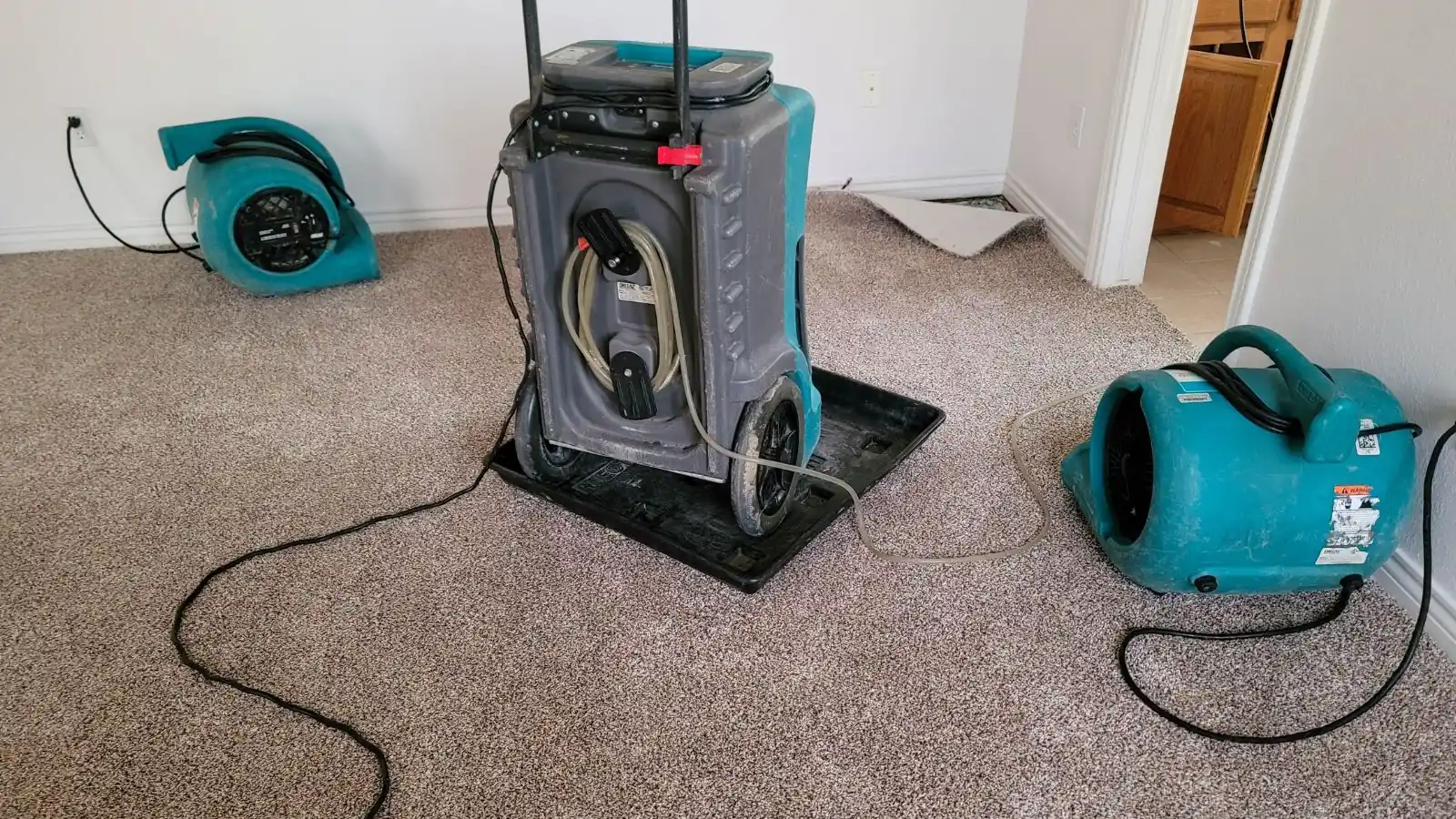
If the room feels cool, smells damp or the baseboards are swelling days after a leak, moisture is still inside the materials. The trade name for fixing that is structural drying and dehumidification. It uses moisture meters, air movers and LGR dehumidifiers to pull water out of wood, drywall and concrete, so repairs are not built over wet framing.
Structural drying is the controlled removal of moisture from building materials after water has been extracted. In Derby, KS, it is the stage that decides whether a water loss ends with a repair or turns into a second problem. It follows extraction and comes before rebuild.
Moisture mapping: finding what you cannot see
Moisture mapping is a room by room survey with a pin or pinless moisture meter and a thermal imaging camera. The crew marks the wet zone on the wall and floor, takes readings and records them. That record is the baseline for the drying plan and for your insurance conversation.
Readings are compared with a dry reference in an unaffected part of the home, since normal moisture levels vary by material. Drying is done when the wet area matches the dry reference, not when it merely feels dry to the hand.
How the equipment works
| Equipment | What it does | Why it matters |
|---|---|---|
| Air movers | Push dry air across wet surfaces | Speeds evaporation from floors and walls |
| LGR dehumidifiers | Pull moisture out of the air | Keeps humidity low so walls can release water |
| Injection or panel drying systems | Move air into wall cavities and under floors | Dries hidden spaces without full demolition |
| Moisture meters and thermal camera | Find and track wet areas | Show when drying is truly done |
The water mitigation process
Water mitigation is the work that stops further damage after a loss, and drying is the biggest part of it. The steps run in order:
- Stop the source and extract standing water.
- Remove materials that cannot be dried, such as soaked padding.
- Set air movers and dehumidifiers and open wall cavities if needed.
- Check readings every day and adjust the equipment.
- Confirm dry readings before any rebuild begins.
Most jobs take several days, and thick materials or wet concrete take longer. The crew explains the expected duration after the first set of readings, since it depends on what got wet.
Why drying is not a DIY fan job
A box fan moves air but does not pull moisture from the air or from inside a wall. Without a dehumidifier, humid air simply recirculates and wet framing stays wet. Without readings, it is easy to stop early and close up a wall that is still damp.
Equipment rental is not something this page offers. If you want to understand what your crew is doing, ask to see the daily moisture log, which should show readings in the same spots each day.
When drying is needed
Drying follows nearly every water loss. If your loss began with water extraction, drying is the next phase. A burst line in a wall is handled the way the burst pipe page describes, and a wet carpeted room is covered on the carpet water damage page.
What affects the cost
The crew gives scope and price before the equipment is set. Cost depends on:
- Number of rooms and square footage affected.
- Material types, since concrete and hardwood dry slower than carpet.
- Equipment count and days on site.
- Whether wall cavities or floors need to be opened.
- Rebuild work after dry readings are confirmed.
Insurers often ask for drying logs and photos, so ask your crew for them at the end of the job. Coverage decisions rest with your insurer and your policy wording. For a number tied to your loss, describe it to dispatch.
Want to know if the structure is really dry? Call dispatch and ask for a moisture assessment.
☎ Call (316) 535-3098What to do while drying runs, and the S500 goals
ANSI/IICRC S500 describes drying goals, equipment placement and monitoring. A crew sets a dry standard from unaffected parts of the building and records readings until the wet areas match it. Do not turn off equipment to save noise or power, because stopping early lets moisture return.
Common questions
Why does my wall still feel wet after the water is gone?
Water soaks into drywall, framing and insulation and can stay there for days. A moisture meter shows what the hand cannot, and a dehumidifier and air movers pull it out.
How long does structural drying take in Derby?
Often several days, but it depends on the materials and how wet they got. Concrete and hardwood take longer than carpet, and the crew tracks readings daily.
Do you handle drying emergencies at night or on weekends?
The line is open 24/7, and a same-day visit is possible when a crew is free. Fast drying is the best defence against a second round of repairs.
Can I use my own dehumidifier?
A home dehumidifier helps with humidity, but it is much weaker than a restoration unit and will not pull water from inside walls. A crew can tell whether it is worth running.
Walls or floors still damp days later? Call dispatch and ask for a moisture assessment.
☎ Call (316) 535-3098