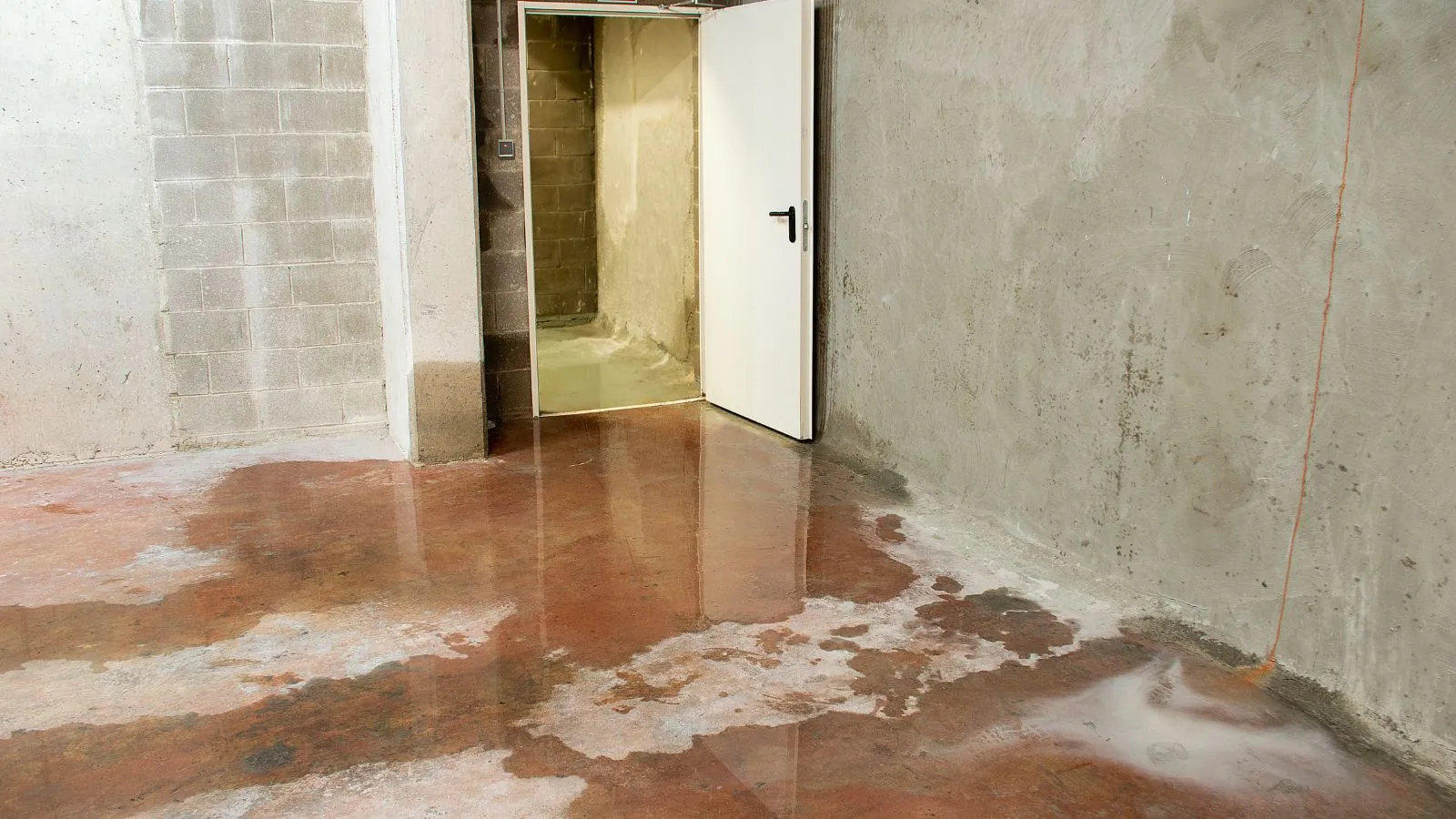
Basement water damage cleanup removes water from a below-grade room and dries the walls, floor and contents. In Derby, KS, whether a home has a basement at all depends on the neighborhood and age, since many homes are on slabs or crawl spaces, so use this page if your home has one.
Water enters through a failed sump pump, a floor drain, a leaking supply line, cracks in the wall or rain running toward the foundation.
Stay off wet stairs and out of the room if water reaches outlets or the panel. Cut power only if you can reach the panel on a dry path, and call the utility or 911 for any electrical risk. Call dispatch from a safe place.
When a basement flood is an emergency
Deep water, rising water or any water near wiring is an emergency. The line is open 24/7. A same-day visit is possible when a crew is free, but heavy rain across the area can stretch crews, and dispatch will give you honest timing.
Avoid electrical risk
Do not enter standing water if a panel, outlet or appliance is in it. Call the utility or 911.
Stop the source if inside
Close the main valve for a pipe failure. For rain entry, you cannot stop the source, so focus on safety.
Lift and photograph
Move what you can reach safely and photograph the water line.
Where basement water comes from
Common sources include a sump pump that failed or lost power, a clogged floor drain, a supply line failure and groundwater pushing through the walls or floor. In neighborhoods near the Arkansas River, the City of Haysville notes that flash flooding and drainage ponds can affect areas that do not normally flood. Check your address on the FEMA flood map.
Restoration is not waterproofing. Once the room is dry, a basement waterproofing contractor addresses cracks and drainage. We say this plainly because drying a basement does not prevent the next rain from entering.
What a wet basement looks like
- Standing water or a damp, dark band along the floor edge.
- A sump pump that is silent or does not move water.
- White mineral deposits on masonry, which suggest repeated seepage.
- Peeling paint or bubbling drywall in a finished room.
- A musty smell that returns after a day of drying.
How cleanup works
Crews pump out deep water, extract the remainder and remove wet carpet, pad and drywall that cannot be dried. Moisture meters guide air movers and dehumidifiers, and wall cavities are opened if insulation is wet. Floors and walls are cleaned, and for rain or groundwater entry the water is treated as contaminated.
Concrete floors and block walls dry slowly. The crew logs readings until they match a dry reference, as the structural drying page describes.
Basement water: source and response
| Source | Water category | Response |
|---|---|---|
| Supply or water heater leak | Clean at first | Extract, dry, check walls |
| Sump pump failure | Rain or groundwater | Treat as contaminated, extract, sanitize |
| Floor drain backup | Sewage | See sewage backup cleanup |
| Foundation seepage | Groundwater | Extract and dry, then see a waterproofing contractor |
What affects the cost
The crew gives scope and price before work begins. Cost depends on:
- Depth of water and how long it sat.
- Finished versus unfinished space.
- Contaminated water and the materials removed.
- Drying days for concrete and block walls.
- Rebuild of drywall, flooring and trim.
The Kansas Insurance Department notes that not all policies cover sump pump failure or sewer backup, and rising water is generally excluded. Check your policy and ask your insurer about endorsements. For your own estimate, call dispatch.
Basement water rising or sitting? Call the 24/7 line before it reaches finished walls.
☎ Call (316) 535-3098Sump pumps and drainage
A sump pump moves groundwater out of a basement, and it fails most often during heavy rain and power outages. Test yours by pouring a bucket of water into the pit before the wet season. A battery backup pump gives extra protection when the power goes out.
Outside, keep gutters clean and downspouts pointed away from the foundation. Soil should slope away from the house. These steps lower the chance that a storm becomes a flooded basement.
Basement safety before cleanup
Do not go downstairs if water is near the panel or outlets, and never mix cleaning chemicals in a closed space. ANSI/IICRC S500 covers below grade water, including how finished walls are opened and dried.
Common questions
Do you handle basement flood emergencies at night or on weekends in Derby?
Yes. The line is open 24/7, and a same-day visit is possible when a crew is free. After heavy regional rain, dispatch will tell you honestly how soon a crew can arrive.
Do you waterproof basements?
No. Restoration dries and cleans the room after a loss. A waterproofing or foundation contractor handles cracks, drainage and grading.
Does a sump pump failure count as flooding?
Insurers often treat it separately from rising water. The Kansas Insurance Department notes that not all policies cover sump pump failure, so ask your insurer.
Can I pump the water out myself?
Pumping too fast can stress the walls if the soil outside is saturated. A crew paces the work and checks the water before moving on.
Basement flooded or seeping? Call the 24/7 line and tell dispatch the depth.
☎ Call (316) 535-3098