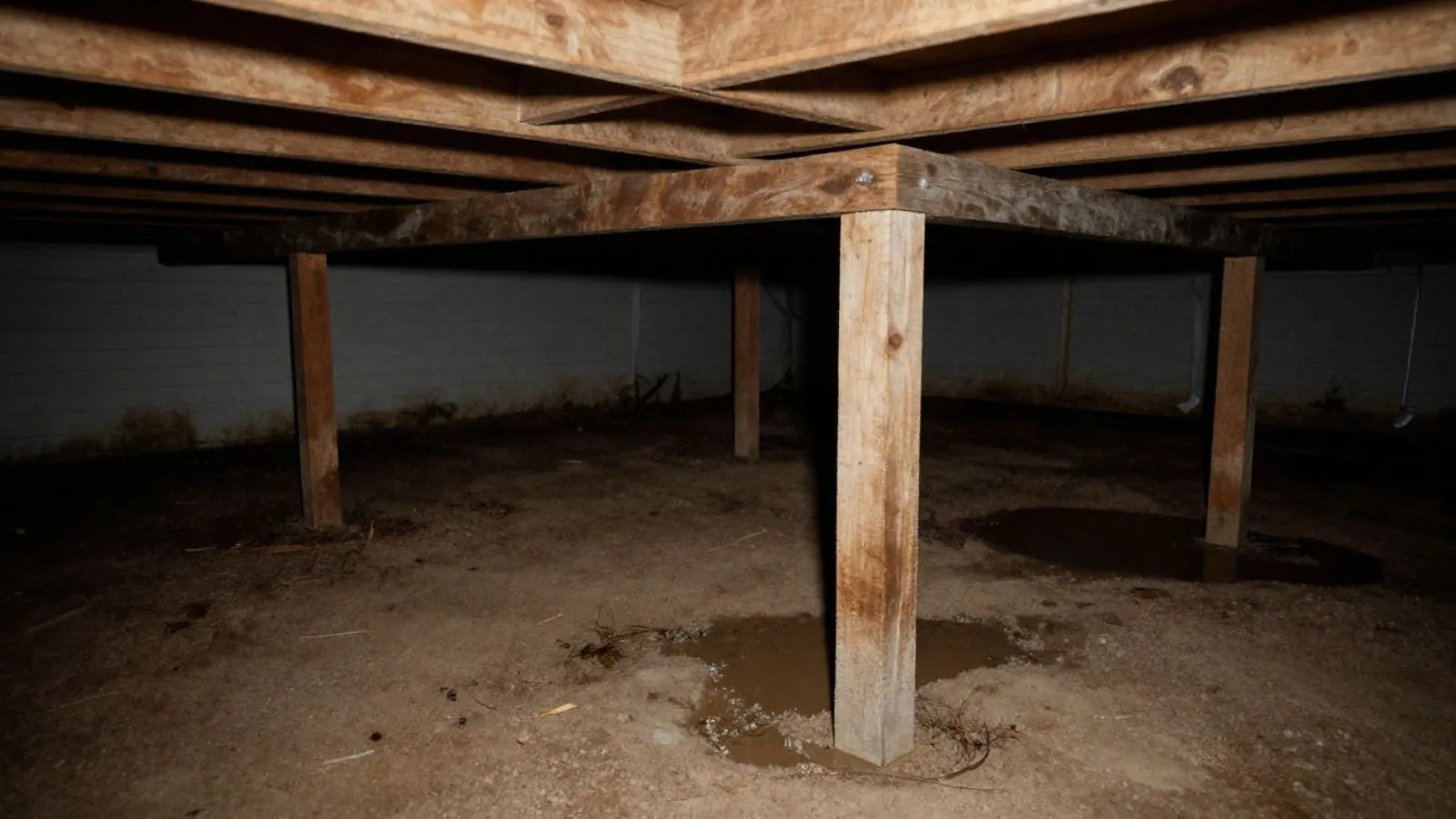
Crawl space water damage is the wetting of the open space under a raised floor, including the soil, joists, subfloor, insulation and any ducts or pipes there. In Derby, KS, a crawl space is only common in some homes, since many are built on slabs or have basements, so check what yours has before assuming.
Where one exists, water arrives from a supply or drain line, a failed irrigation line or surface water entering at a vent or the foundation edge.
Do not crawl into a wet space near wiring, and do not enter if you can see standing water touching electrical connections. Look from the access hatch with a flashlight, photograph what you can and call dispatch. The line is open 24/7, though crawl space damage is often less urgent than an active leak.
When a crawl space becomes urgent
Water in the crawl space is urgent when it is deep, flowing or reaches wiring, ducts or the underside of the floor. A damp, musty space with no active leak can wait for a scheduled assessment, but should not wait weeks.
Safety around a crawl space
Wet soil, low clearance and old wiring make a crawl space hazardous. Leave the entry to trained crews and call the utility or 911 for any electrical or gas risk.
Where crawl space water comes from
Pipes in a crawl space can leak slowly for months. Irrigation lines are another route. Derby follows the City of Wichita's outdoor watering days of Tuesday, Thursday and Saturday, and a broken sprinkler line or valve box near the foundation can send water toward a vent. Gutters that dump at the foundation do the same.
A damp soil floor makes humid air that condenses on cool ducts and pipes. That is a moisture problem, not a flood, and the fix is usually a combination of drainage, a vapor barrier and a drier air path.
Signs of crawl space trouble
- A musty odor in the rooms above, especially in hot weather.
- Floors that feel cold, soft or springy near an exterior wall.
- Insulation sagging or dark where it meets the subfloor.
- Visible standing water, wet soil or condensation on ducts.
- Rust on metal hangers and fasteners.
How the cleanup works
Crews use a pump or small extractor to remove standing water, then check joists, the subfloor and the insulation with moisture meters. Wet fiberglass insulation is removed because it holds water against the wood. Air movers and a dehumidifier dry the space, and a vapor barrier can be discussed for the soil.
If the water came from a pipe, the plumber repairs it. If it came from the yard, the fix is drainage and grading, which is outside restoration. The structural drying page explains the equipment used.
Crawl space cause and response
| Cause | What it affects | Response |
|---|---|---|
| Leaking supply or drain line | Joists, subfloor, insulation | Plumber repairs, crew dries |
| Irrigation or gutter water | Soil, vent areas | Fix drainage, extract, dry |
| Condensation | Ducts, pipes, insulation | Address humidity and air flow |
| Flood or heavy rain entry | Whole space | See flood damage cleanup |
What affects the cost
The scope and price are laid out before any work begins. The cost depends on:
- How much water and how long it sat.
- Square footage of the crawl space and ease of access.
- Whether insulation and a vapor barrier need replacing.
- Drying days and equipment.
- Repairs to the floor above if the subfloor was damaged.
Sudden leaks are often covered. Repeated seepage, poor drainage and long term humidity are often excluded. Ask your insurer what applies to a crawl space in your policy. For a rough number, describe the space to dispatch.
Wet crawl space or musty floors? Call dispatch for an assessment of what needs drying.
☎ Call (316) 535-3098Checking a crawl space safely
Wear gloves, boots and a mask, and use a flashlight. Look at the soil, the insulation, the joists and the pipes. Standing water, dripping pipes, sagging insulation and dark staining on wood are signs of trouble. If you see wiring close to water, leave and call for help.
Photograph what you see before anything is moved. A technician will take moisture readings in the joists and subfloor and decide what needs to be removed.
Crawl space safety and S500
Do not enter a crawl space with standing water near wiring. Wear gloves, boots and a mask, and tell someone where you are. ANSI/IICRC S500 guides how wet framing and subfloors are dried and when insulation must be removed.
Common questions
Is a wet crawl space an emergency?
Deep or moving water, or water near wiring, is. A damp space with no active leak is urgent but not an emergency, and dispatch can help you tell which it is, any hour.
Do all Derby homes have crawl spaces?
No. Many are on slabs or have basements, so check your foundation type before using this page. Your home inspection or builder records usually say.
Can I dry it with fans?
Fans move air but cannot pull moisture out of wet joists and soil without a dehumidifier and readings, and they can pull humid air into the house above.
Who fixes the vapor barrier?
A crawl space contractor installs it. The restoration crew dries the space first, since a barrier laid over wet soil traps moisture.
Water or damp insulation under your floor? Describe it to dispatch and get a crew assessment.
☎ Call (316) 535-3098