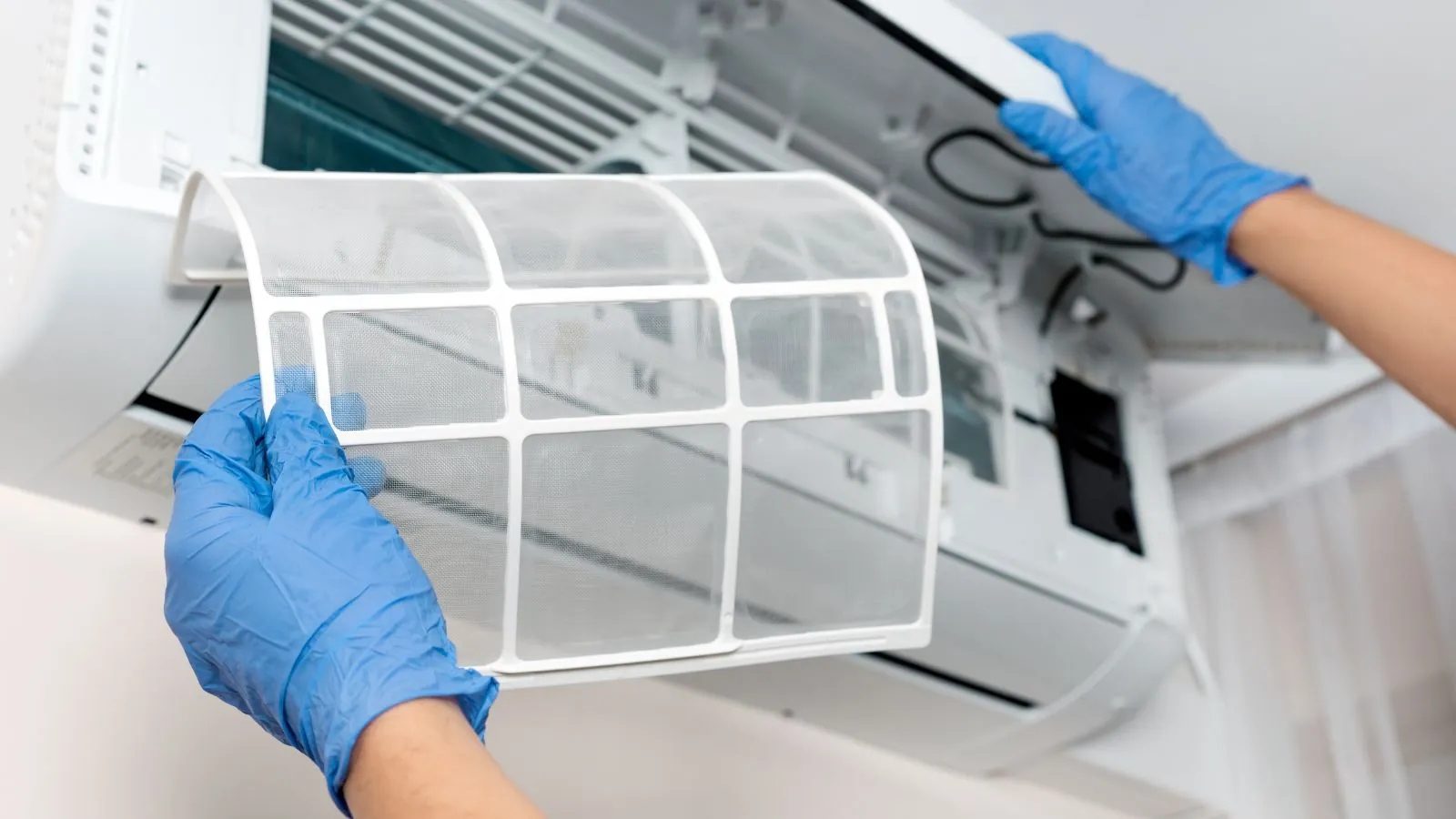
AC leak water damage is water released by a central or split air conditioning system, almost always from the condensate drain, a cracked drain pan or a frozen evaporator coil that thaws. In Derby, KS, many systems sit in attics or closets above finished ceilings, so a clogged line can soak drywall for days before a stain shows.
The water is usually clean, but standing condensate in a pan can grow slime and carry an odor.
Turn the thermostat to off so the system stops producing more condensate, and set a bucket under any drip. If water is near the air handler's wiring, leave it alone and call a licensed HVAC technician. Call us once the leak is contained and wet materials need attention.
When an AC leak calls for a crew
An AC leak is not always an emergency, but a ceiling that is dripping or sagging is. If you also have a stain below the unit, read the ceiling page and call dispatch the same hour. The line is open 24/7 for any urgent call.
Not every AC leak is urgent
A small drip into a pan that you can empty and clean is a maintenance issue. Wet drywall, a stained ceiling or a soft closet floor means water has left the system and needs drying.
Why central AC leaks happen
Condensate drains collect algae and dust, and the line clogs over a hot summer. When it does, the pan fills and overflows, or a safety float switch fails to cut the unit off. A frozen coil is another route, because ice melts into the pan faster than it can drain. A technician can flush the line and test the float switch, which is a good yearly check.
Hot, humid weather means the system runs long cycles and makes more condensate, so leaks tend to appear in the middle of a stretch of heat. A line that was dry in spring can overflow by July.
Signs of an AC leak inside the house
- A stain near an air vent or on the ceiling below the attic unit.
- Water in the drain pan or a rusty pan.
- A closet floor that feels damp or smells musty.
- An air handler that stopped cooling and has frost on the coil.
- Warped baseboard near a wall unit or closet.
How the repair works
The crew checks moisture with a meter and a thermal camera, then removes wet insulation and drywall that cannot be saved. Air movers and a dehumidifier dry the cavity, and readings are tracked until dry. The HVAC technician repairs the line or the pan separately.
Wood and laminate floors near a closet air handler can cup after repeated wetting. The hardwood floor page covers that outcome, and the structural drying page explains the drying equipment.
Where AC water travels
| Unit location | Where the water ends up | Typical fix |
|---|---|---|
| Attic air handler | Ceiling, insulation, light fixtures | Dry the cavity, replace drywall |
| Closet or utility room | Closet floor, carpet, baseboard | Extract, dry, replace pad |
| Window or wall unit | Wall below, flooring | Dry the wall base and floor |
| Outdoor coil line | Foundation edge, crawl space | Check the crawl space for moisture |
What affects the cost
The crew gives you scope and price before any wall is opened. The factors behind it:
- How long the line leaked before it was caught.
- Whether insulation and drywall are wet or just damp.
- Flooring type in the affected rooms.
- Drying days and equipment count.
- Repair and paint once readings are dry.
Insurers often treat a sudden overflow differently from a slow, long-term drip, and some exclude maintenance related failures. Ask your insurer what applies. If you want a number for your house, describe the damage to dispatch.
Ceiling or floor wet from the air conditioner? Call dispatch for a crew assessment.
☎ Call (316) 535-3098Small habits that prevent AC leaks
Change filters on schedule, since a clogged filter can freeze the coil and cause overflow when it melts. Flush the condensate line once a year with a vinegar and water mix if the manufacturer allows it. Check the drain pan for rust and water. A float switch can shut the unit down before the pan overflows.
If the unit sits in an attic, check it before the cooling season starts. A small stain on a ceiling in spring is easier to fix than a soaked ceiling in July.
Safety around a leaking air conditioner
Turn off the thermostat and the unit's breaker, and place a bucket under any dripping ceiling. Do not use the system until the leak is found. ANSI/IICRC S500 is the reference for categorizing condensate water and planning the drying of ceilings and insulation.
Common questions
Is an AC leak a 24/7 emergency?
A ceiling that bulges or drips steadily is. A damp pan is not. Dispatch is open 24/7 for the first case, and the call taker will help you decide which one you have.
Who fixes the air conditioner itself?
A licensed HVAC technician repairs the line, pan and switch. The restoration crew dries and repairs what the water touched.
Can a clogged condensate line cause mold?
Standing water and damp materials give mold what it needs. Fix the source, dry everything and ask your insurer or a physician about any health concerns.
How do I prevent another AC leak?
Have a technician flush the drain line each season and confirm the float switch works. A small cup of dry filter changes also helps airflow.
Air conditioner leaking into the house? Turn it off and call dispatch.
☎ Call (316) 535-3098