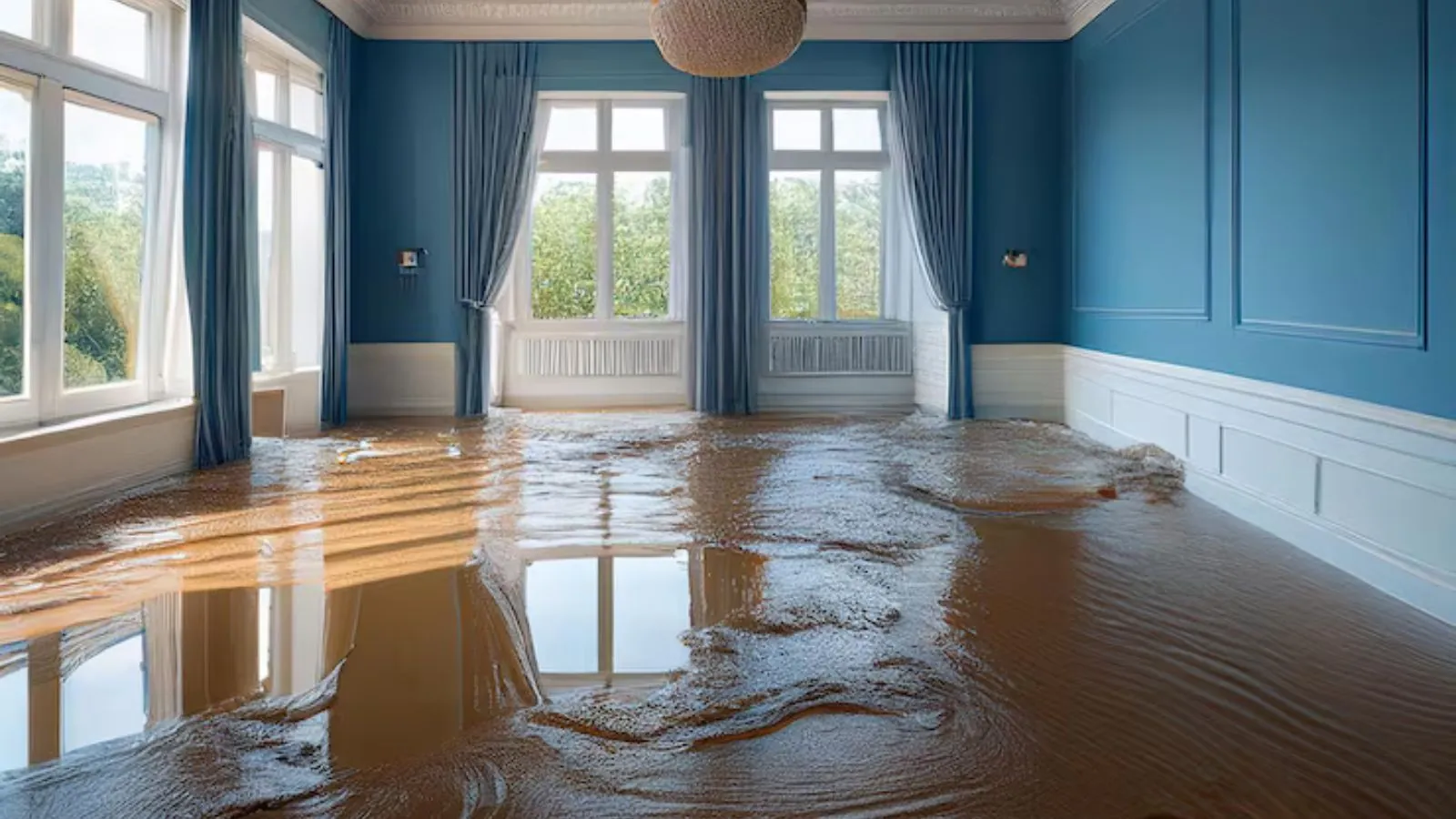
Wall and drywall water damage repair is the drying and replacement of drywall, baseboards, insulation and framing after water gets into a wall. In Derby, KS, it usually follows a plumbing leak, a roof or window leak, or water that wicked up from a wet floor. Gypsum drywall loses strength when wet and can hold moisture against the studs.
Do not cut into a wall before you know the water is off. Turn off the source, move furniture back from the wall and take photographs. If the wall is near outlets or switches, leave the power off to that circuit until the area is dry and checked.
When a wall is wet inside
A wet wall is not always a visible mess. Paint that blisters, a baseboard that swells and a seam that opens are signs. Dispatch is open 24/7, and a same-day visit is possible when a crew is free. Prompt drying often saves the drywall and avoids a larger repair.
What water does to drywall and framing
Paper faced gypsum board wicks water upward from the floor and holds it. Once it is soaked, it softens and crumbles. Fiberglass insulation inside the wall compresses and stays wet. Wood framing dries more slowly than the surface, so a wall can feel dry while the studs still read wet on a meter.
Baseboards often swell at the bottom first. Wet baseboard is a clue to check the wall cavity behind it.
Signs of water in a wall
- Bubbling or peeling paint.
- A soft spot or a discolored stain.
- Swollen baseboard or a gap at the floor.
- Seams that open or crack.
- A musty smell near the wall.
How the repair proceeds
The crew checks with a moisture meter and a thermal camera, then cuts small openings or removes the lower portion of drywall to expose the cavity. Wet insulation comes out, and air movers and a dehumidifier dry the studs. Some jobs use injection drying through small holes to save intact drywall.
When the wall is dry, new drywall is hung, taped, textured and painted to match. A flood cut, which is a cut 12 to 24 inches above the waterline, is common after contaminated water. The crew explains why before it cuts. See the structural drying page for the drying side.
Drywall decisions
| Condition | Typical decision | Why |
|---|---|---|
| Dry, intact, no stain | Keep | Nothing to fix |
| Damp but intact | Dry in place or inject air | Saves paint and texture |
| Soft, stained or bubbling | Cut out and replace | Gypsum loses strength |
| Contaminated water | Flood cut and replace | Porous material cannot be sanitized |
Where wall water starts
Plumbing is the most frequent cause, and the burst pipe page covers pressurized line failures. A leak through a roof or window may follow a different path, as the ceiling page explains for the attic side. Kitchen walls often get wet from a sink line, covered on the kitchen page.
What affects the cost
You get scope and price before work begins. Cost depends on:
- Linear feet of wall and height of the wet area.
- Drywall, insulation and baseboard that must be replaced.
- Drying days and equipment.
- Texture and paint matching.
- Whether the wall is exterior and has siding behind it.
Policies often cover a sudden leak that wets a wall and often exclude a slow seep. Check your policy and ask your insurer. If you want a real number, describe the wall to dispatch.
Wall wet, soft or bubbling? Call dispatch and ask for a moisture check.
☎ Call (316) 535-3098Insulation, paint and finish
Wet insulation behind drywall holds water against the framing. Fiberglass batts that stay wet lose their value and are usually removed. Blown insulation can be harder to dry. After the cavity is dry, new insulation, drywall, texture and paint finish the job.
Paint a wet wall only after readings are normal, because paint over damp drywall bubbles and peels. Ask your contractor to prime stains that bleed through. Matching texture takes a skilled hand, so ask to see a sample.
Wall safety and S500 guidance
Do not cut into a wall that may hold wiring or a pressurized pipe without shutting off power and water. ANSI/IICRC S500 guides how wet drywall, insulation and framing are tested and dried before repairs close the wall.
Common questions
Do you handle wall water damage emergencies at night or on weekends in Derby?
The line is open 24/7, and a same-day visit is possible when a crew is free. Stop the water source first, then call.
Can wet drywall be saved?
If it is dried quickly and has not softened, sometimes. Soft, stained or contaminated drywall is usually cut out and replaced.
What is a flood cut?
A horizontal cut in drywall above the waterline, usually 12 to 24 inches up, so wet material and insulation can be removed and the cavity dried.
Will the new drywall match my wall?
A good crew matches texture and paint where possible. Ask how the repair will be blended, since a full wall repaint may look better than a patch.
Wall damp, soft or bubbling? Call dispatch for a moisture check.
☎ Call (316) 535-3098